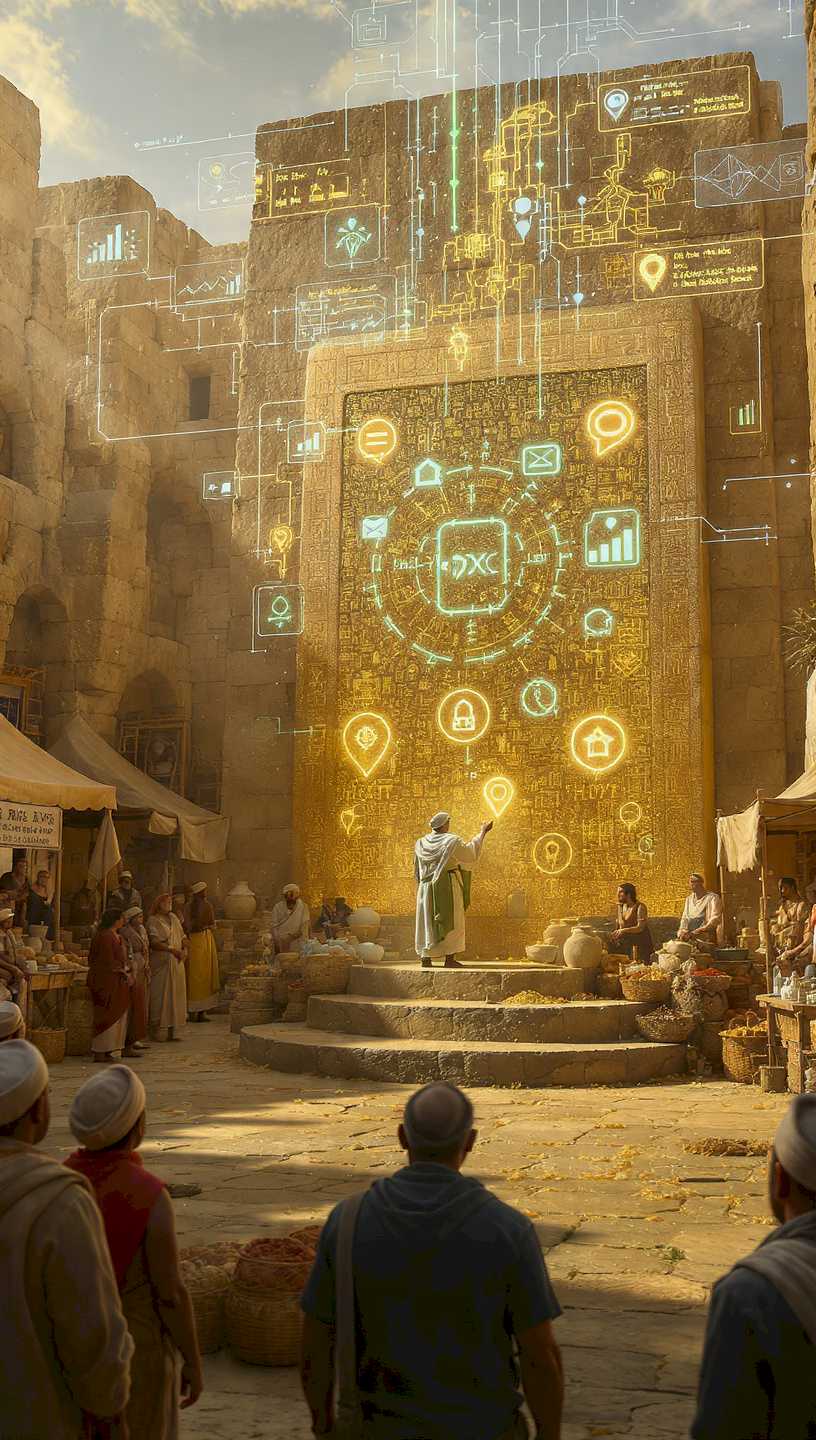

From Barter to the Digital Economy
From the earliest barter systems in ancient Mesopotamia to today’s digital marketplaces, commerce has always evolved around one central idea: connecting buyers and sellers in ways that build visibility, trust, and value. Whether it was the Silk Road bridging East and West in the 1st millennium or steam-powered factories reshaping global supply chains in the 18th century, each innovation in trading systems expanded reach and enabled deeper engagement.
In the same spirit of evolution, modern digital platforms like Green Platform take this centuries-old principle further by helping conscious, eco-friendly businesses not just appear online, but thrive through connected digital presence. Leveraging data-driven insights and integrated visibility, Green Platform bridges the gap between brands and ethical consumers — reminding us that the core of commerce remains the same: visibility that leads to meaningful connection.
Commerce is one of humanity’s oldest survival tools — long before apps, websites, or online platforms existed, people were already exchanging value to meet daily needs. What began as simple barter between neighbors slowly evolved into organized trade networks, financial systems, and eventually today’s interconnected global marketplaces.
Understanding the history of commerce helps us see why modern platforms emphasize visibility, engagement, and data-driven growth. Even in ancient times, successful traders were those who built trust, expanded reach, and adapted to new systems — the same principles that guide digital business ecosystems today.
Let’s walk through the key stages of how commerce and trading developed across history.
🌾 Ancient Trade & the Barter System (c. 9000–3000 BCE)
The earliest form of commerce was barter — exchanging goods directly, such as grain for tools or livestock for pottery.
One of the first organized trading societies emerged in Babylon, where merchants operated under structured rules. Around 1754 BCE, King Hammurabi introduced the Code of Hammurabi, one of the earliest legal frameworks to regulate trade, contracts, pricing, and debt.
Meanwhile, ancient Egypt developed river-based commerce along the Nile, while the Indus Valley civilization created standardized weights — an early sign of measurement systems designed to make trade fair and repeatable.
Key idea of this era:
Commerce moved from informal exchange to regulated systems, proving that trust and structure are essential for sustainable trade.
🛤️ Classical & Medieval Trade Routes (c. 500 BCE – 1500 CE)
As civilizations expanded, trade routes connected continents. Spices, silk, gold, and ideas traveled between Asia, the Middle East, Europe, and Africa.
Merchants in cities like Venice became powerful intermediaries of global trade. During the 13th century, explorer Marco Polo helped open European awareness of Asian markets through his journeys and writings.
By 1600, England formalized overseas commerce through the East India Company, one of the world’s first multinational corporations, setting precedents for shares, investors, and global supply chains.
Key idea of this era:
Trade scaled through networks and connectivity — early versions of today’s global platforms.
⚙️ The Industrial Revolution & Modern Capitalism (1760–1900s)
The Industrial Revolution transformed commerce from manual production to machine-driven manufacturing.
In 1776, economist Adam Smith published The Wealth of Nations, laying the intellectual foundation of modern capitalism and free markets.
Innovators like Richard Arkwright revolutionized textile manufacturing, enabling mass production. Around the same time, stock exchanges expanded, banking systems matured, and retail shifted toward department stores.
This period introduced:
Mass production
Wage labor
Formal finance
Consumer markets
Key idea of this era:
Commerce became systematized and scalable, powered by technology and capital.
🌐 Digital Commerce & Platform Economies (1990s–Present)
The late 20th century brought the internet — and with it, e-commerce, online marketplaces, and data-driven business models.
Today, commerce is no longer just about selling products. It’s about:
Digital visibility
Customer engagement
Analytics and insights
Integrated communication
Modern platforms act as connectors between businesses and customers, offering tools for listings, messaging, reviews, and performance tracking — echoing the same historical pattern: successful trade always follows reach, trust, and adaptability.
Throughout history, commerce has continually adapted — from bartering in ancient markets to multinational corporations in the Industrial Age, and now to digital ecosystems that enable global reach in minutes. Yet at every stage, success has depended on one foundational element: being seen, understood, and trusted.
Today, platforms such as Green Platform embody this evolution by offering more than simple online listings. They provide a trusted registry of vetted sustainable businesses, enriched with meaningful insights, Sustainability Snapshots, and a community that values ethical practices — helping conscious consumers make informed decisions and businesses build lasting engagement.
By integrating digital strategy with values-based commerce, Green Platform shows that even in the digital age, the oldest principles of trade — visibility, transparency, and trust — still drive success. Modern commerce doesn’t replace history — it builds on it, using digital tools to connect people and purpose like ever before.
https://greenplatform.info/about-us/